Research Overview
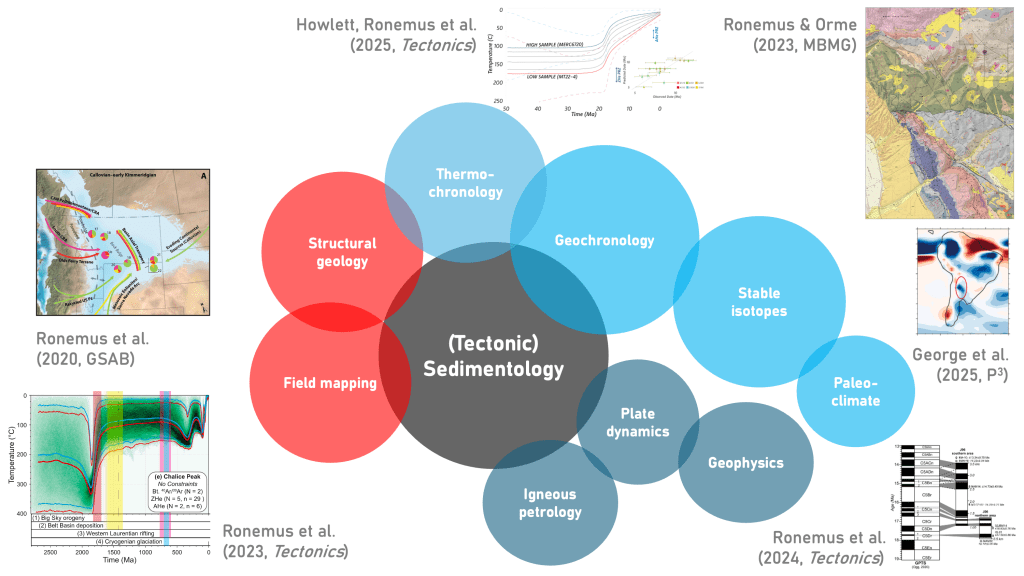
My research program integrates field-based sedimentology, basin analysis, and structural geology with geochronology, thermochronology, and stable isotope geochemistry to investigate how mountain building, climate, and deep-Earth processes shape continental topography and sedimentary basins. I work primarily in the South and North American Cordilleras.
Motivation
I work primarily in Cordilleran orogenic systems, in which subduction of an oceanic plate leads to mountain building in the overriding continent.
Beyond just creating topography that’s interesting to look at (and fun to climb), these systems control things like:
– atmospheric circulation and precipitation
– river drainage and sediment discharge
– biodiversity and biome development
– natural hazards, like earthquakes and volcanoes
– concentration of economic minerals and petroleum
So, if we can better understand how Cordilleran systems grow and evolve, we can better understand their influence on these things that matter to people.
The Andes are Earth’s best modern example of such a system. My Ph.D. and some ongoing work is part of the TransANdean Great Orogeny (TANGO) project, an internationally collaborative and multi-disciplinary project focused on studying processes responsible for variations in the modern crustal thickness and history of uplift of this mountain belt.
By integrating geophysics, structural geology, thermochronology, sedimentology/basin analysis, and other approaches, our overarching goal is to build and test a generalizable model of Cordilleran mountain building.
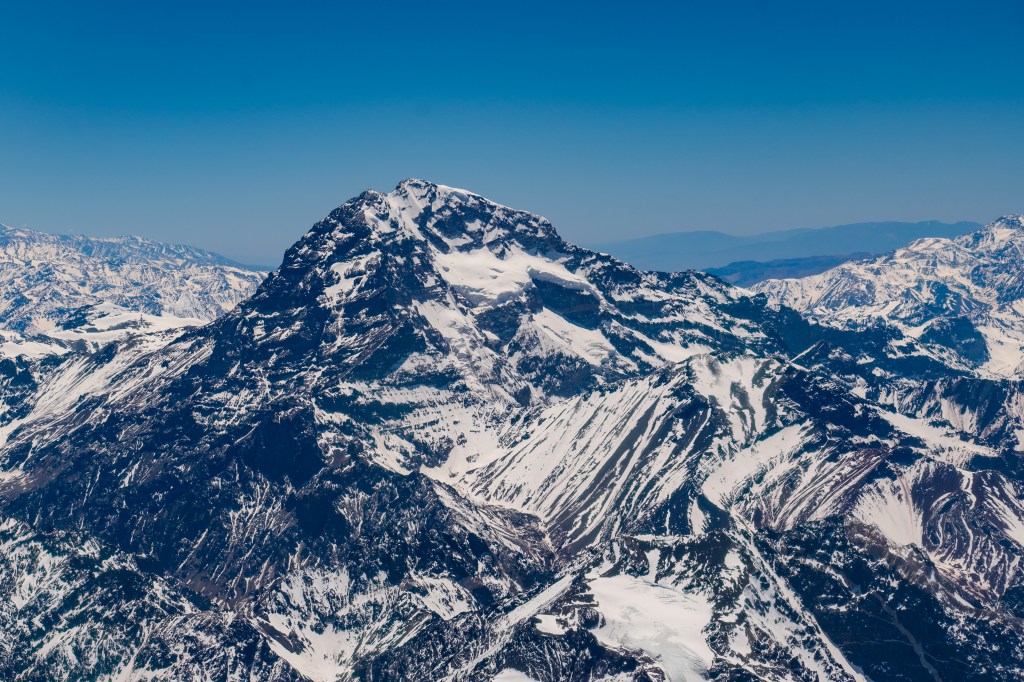
Cerro Aconcagua (6,961 m/22,837 ft): The highest peak in the western hemisphere, as seen from a flight between Mendoza, AR and Santiago, CL
Projects
Forearc Basins and Terrane Accretion
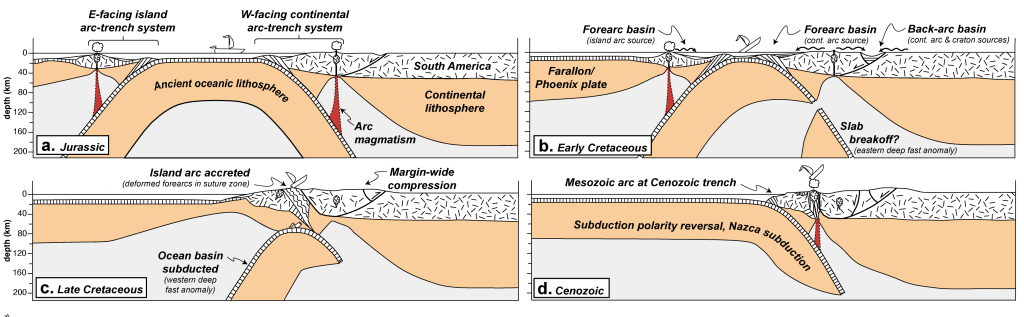
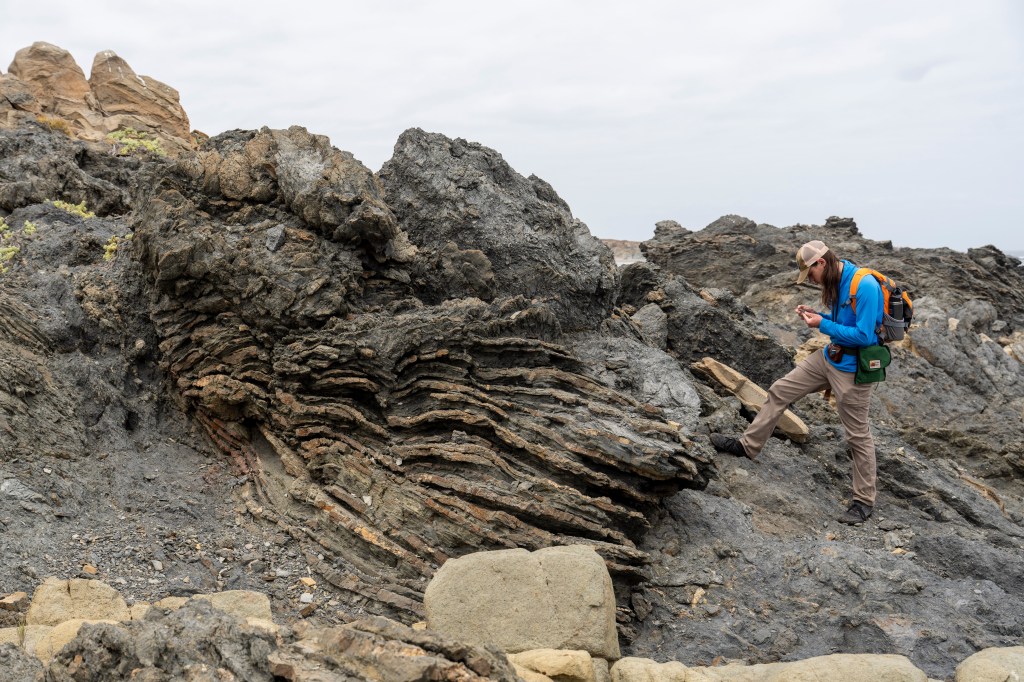
The circum-Pacific orogenic belt preserves a record of terrane accretion that is well documented in North America but poorly tested in South America, where an apparent lack of Mesozoic sutures and ophiolites contrasts sharply with geophysical models proposing large-scale terrane collision. My NSF Postdoctoral Fellowship project provides the first direct field-based geologic test of Mesozoic terrane accretion models in the central and southern Andes.
Working in the forearc of central Chile (~30–34°S), I am using basin analysis, detrital zircon U-Pb geochronology and trace element geochemistry, Lu-Hf isotope analysis, and sandstone petrography to test whether Mesozoic turbidite systems record arc-continent collision or continuous east-dipping subduction. Preliminary results from field mapping and zircon geochronologic analysis contradict proposals for Cretaceous accretion and instead suggest Late Triassic–Early Jurassic marginal reorganization. This project addresses a long-standing debate with implications for understanding subduction polarity and crustal evolution across the Pacific realm.
Main Collaborators: Kurt Sundell (Idaho State University); Stephan A. Graham (Stanford University); Ismael Murillo (SERNAGEOMIN, Chile); María Rodríguez (Universidad Andrés Bello, Chile)
Funding: NSF EAR-PF #2518506
Undergraduate student researchers: Tiana Hursh, Parker Hazelbush, Amarissa Cramer, and William Crater (Idaho State University)
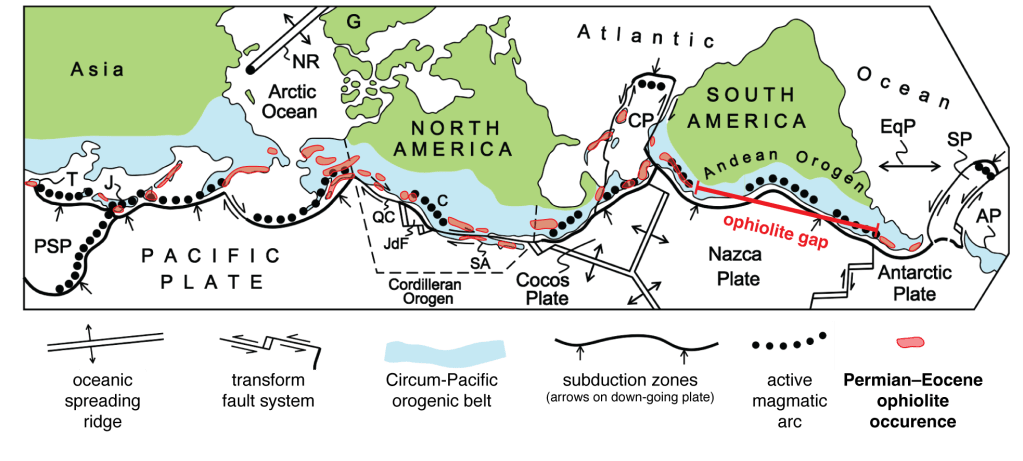
Great-circle projection of the circum-Pacific orogenic belt, showing ophiolite occurrences. Modified from Dickinson (2008), with ophiolites from Vaughan and Scarrow (2003). Note ophiolite ‘gap’ along western South America–Identified by Eldridge Moores in Assembling California (McPhee, 1994) as the “largest question in ophiolite tectonics”.
Foreland Basin Evolution and Mountain Building
Foreland basins form in response to tectonic loading during mountain building and preserve a rich record of orogenic processes. A central thread of my research asks how the stratigraphic architecture of foreland basins records the growth, migration, and structural style of adjacent fold-thrust belts, and how sedimentation itself feeds back on deformation.
Southern Central Andes, Argentina
My Ph.D. research focused on the Cretaceous–Neogene foreland basin of the southern Central Andes (~30–36°S), part of the TransANdean Great Orogeny (TANGO) project. Through fieldwork along a >500 km transect from the High Andes to the Sierras Pampeanas, I documented Eocene fluvial megafan deposits and tracked the flexural migration of the foreland basin flexural wave through time. This work produced the first model linking Cretaceous, Paleogene, and Neogene phases of basin evolution in this segment of the Andes, demonstrating that east-vergent fold-thrust belt growth drove foreland basin migration. A key finding is that wedge-top sedimentation both responds to and modulates thrust belt propagation, driving out-of-sequence deformation and rapid exhumation through internal wedge dynamics. These results challenge models conceptualizing the orogenic wedge as west-vergent and yield insight into how the southern Central Andes evolved over Cretaceous to recent time.
Main Collaborators: Caden J. Howlett (Utah State University); Peter G. DeCelles, Barbara Carrapa (University of Arizona); Laura Giambiagi, Julieta Suriano (IANIGLA CONICET, Argentina); the TANGO project team
Funding: NSF EAR #2020935 (TANGO); U.S. Fulbright Research Scholarship; American Philosophical Society Lewis and Clark Exploration Scholarship
Key publications:
Ronemus, C.B., C.J. Howlett, P.G. DeCelles, B. Carrapa, V.A. Muller, L.M. Fennel, N.A. Peluffo, L. Lothari, and J. Suriano. The Cretaceous–Neogene basin record of the High Andes and implications for evolution of the southern Central Andean orogenic system. Expected submission Spring 2026 to Earth Science Reviews.
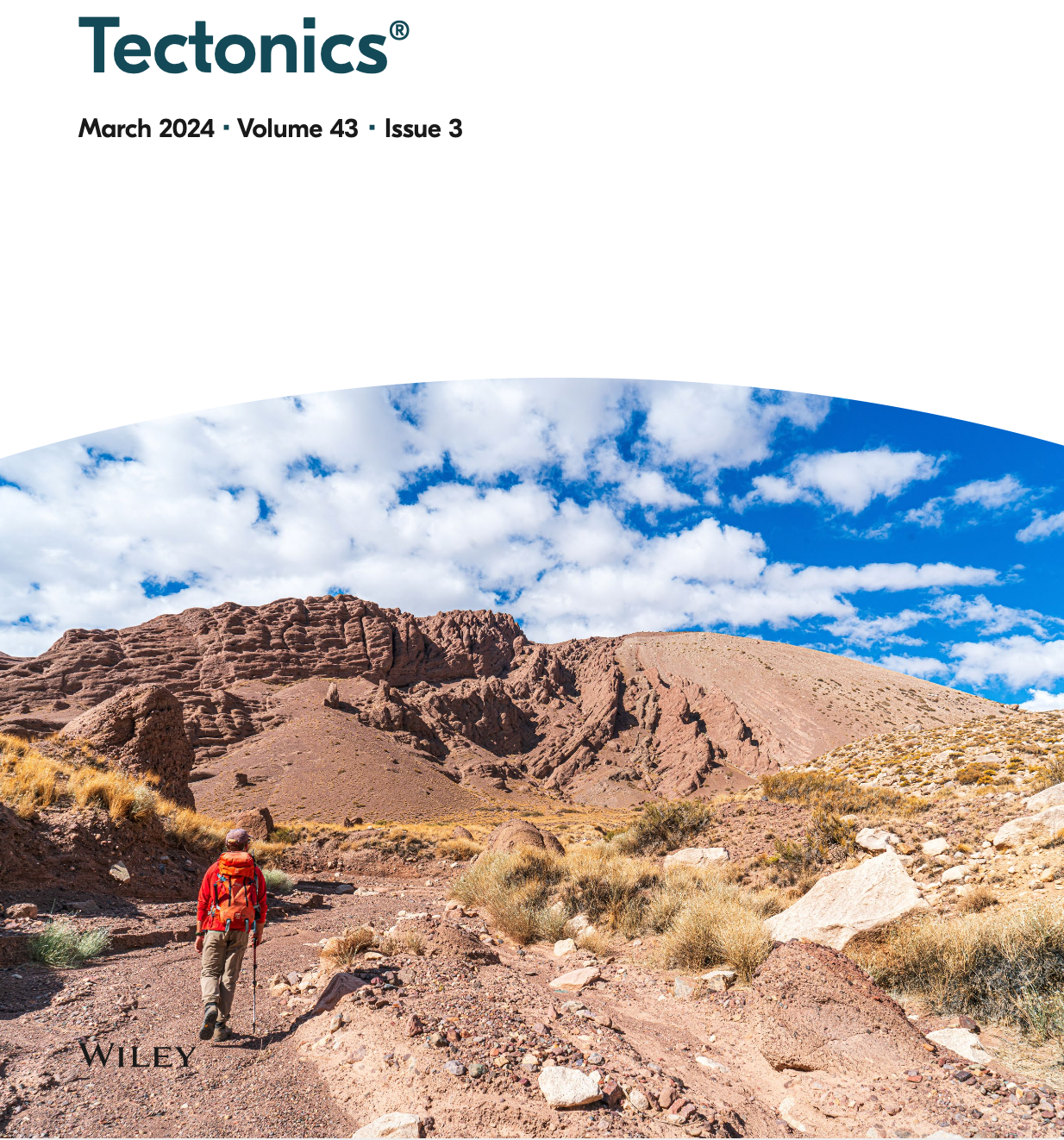
Ronemus, C.B., Howlett, C.J., DeCelles, P. G., Carrapa, B., & George, S.W.M., The Manantiales basin, southern Central Andes (∼32°S), preserves a record of late Eocene–Miocene episodic growth of an east‐vergent orogenic wedge: Tectonics, v. 43, no. 3 (cover article), e2023TC008100. doi:10.1029/2023TC008100, March 2024.
Howlett, C.J., Ronemus, C.B., Carrapa, B., & DeCelles, P.G., Miocene construction of the High Andes recorded by exhumation of the Frontal Cordillera, La Ramada massif of western Argentina (32°S): Tectonics, v. 44, e2024TC008433, doi:10.1029/2024TC008433, January 2025.
Northern Rocky Mountains, Montana and Wyoming
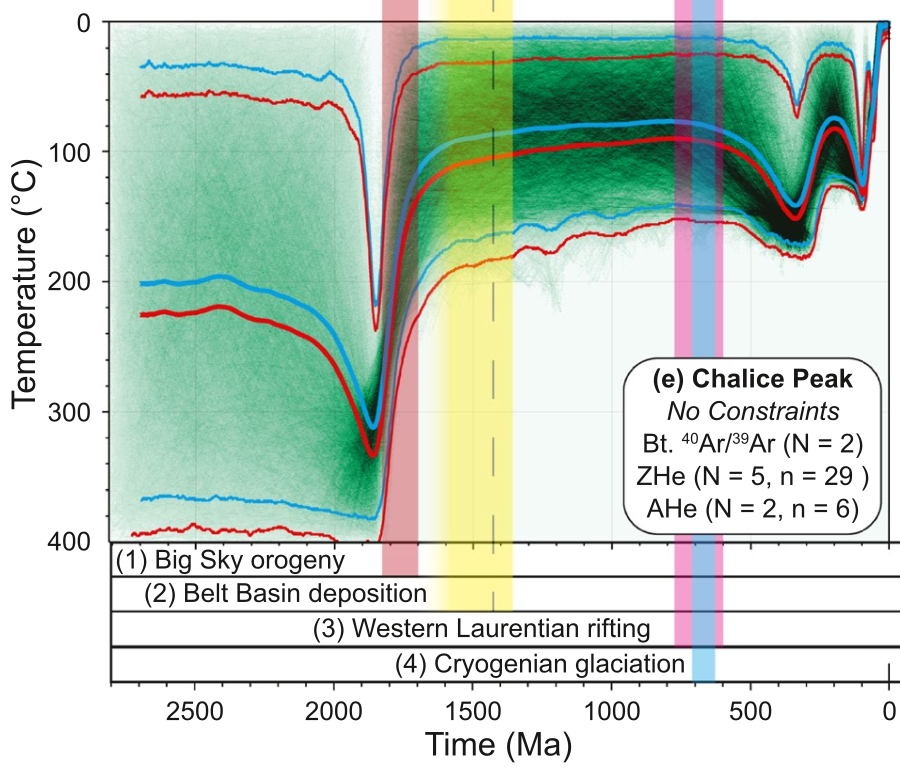
This work examined early foreland basin development in the northern Rocky Mountains. Using detrital zircon U-Pb provenance analysis of foreland basin strata, I showed that basement-involved reverse faults partitioned the foreland basin by mid-Cretaceous time. Deep-time thermochronology of the Beartooth Mountains revealed a mid-Cretaceous cooling event. My geologic mapping in the Highland Mountains documented Proterozoic reverse fault reactivation preceding thin-skinned thrusting, highlighting the role of inherited crustal architecture in controlling deformation style. Together, these results challenge traditional models attributing basement uplift in Montana entirely to flat-slab subduction.
Main Collaborators: Devon A. Orme (Montana State University); William R. Guenthner (University of Illinois, Urbana-Champaign), Stephen E. Cox (Columbia University)
Funding: USGS EDMAP; Montana State University
Student mentees and field assistants: Christopher A.L. Kussmaul, Dominic D’Amato, Sophie Black, Saré Campbell, John Cook (Montana State University)
Key publications:
Ronemus, C.B., Orme, D.A., Guenthner, W.R., Cox, S.E., and Kussmaul, C.A.L., Orogens of Big Sky Country: Reconstructing the Deep-Time Tectonothermal History of the Beartooth Mountains, Montana and Wyoming, USA: Tectonics, v. 42, e2022TC007541, doi:10.1029/2022TC007541, January 2023.
Ronemus, C.B., Orme, D.A., Campbell, S., Black, S., Cooke, J., Mesoproterozoic–Early Cretaceous provenance and paleogeographic evolution of the Northern Rocky Mountains: Insights from the detrital zircon record of the Bridger Range, Montana, Geological Society of America Bulletin, v. 133, no. 3/4, p. 777-801, doi:10.1130/B35628.1, April 2021.
Ronemus, C.B. & Orme, D.A., Geologic map of the eastern half of the Melrose 7.5’ quadrangle and the western half of the Wickiup Creek 7.5’ quadrangle, southwestern Montana: EDMAP portion of the National Geologic Mapping Program, Montana Bureau of Mines and Geology, 1 sheet, scale 1:24,000, April 2023.
Geochemical Paleomohometry
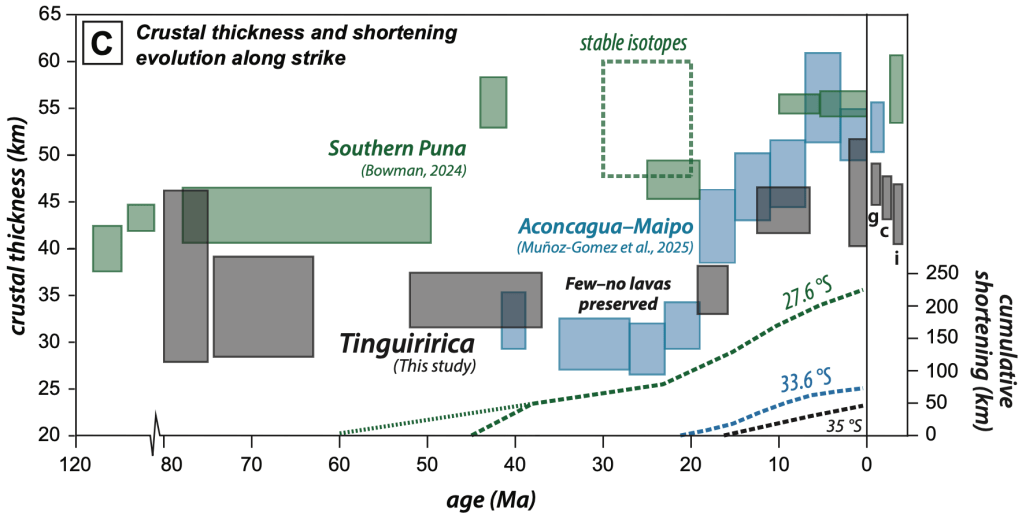
The geochemistry of arc magmas records the crustal conditions under which they formed, allowing for reconstruction of sub-arc crustal thickness through time. I use trace element compositions of zircon and whole-rock igneous samples as crustal thickness proxies, comparing reconstructed thickness evolution against independent structural and geophysical constraints.
In a recent study of over 70 million years of volcanic rocks from the southern Central Andes (~35°S), my coauthors and I tracked the evolution from modest Late Cretaceous crustal thinning during extensional tectonics to rapid Neogene crustal thickening of ~10 km coinciding with retroarc shortening and accelerated plate convergence. The close agreement between geochemical crustal thickness estimates and kinematic cross-section reconstructions validates these proxies as tools for tracking crustal evolution in deep time.
With collaborators P. Luffi and M. Ducea, I am developing a quantitative zircon geochemical crustal thickness calibration based on a global Quaternary arc zircon dataset, including samples I collected across the Southern Andean Volcanic Zone. These techniques also have promise in facilitating a “detrital prospecting” approach that applies zircon geochemistry to modern river sands for assessing porphyry copper prospectivity and critical mineral exploration.
Main Ongoing Collaborators: Peter Luffi and Mihai Ducea (University of Bucharest, Romania); Caden Howlett (Utah State University); Andrés Echaurren (IANIGLA CONICET, Argentina); Michelle L. Foley (University of Arizona)
Key publication:
Ronemus, C.B., C.J. Howlett, P.G. DeCelles, B. Carrapa, E. Echaurren, M. Barrionuevo, J.G. Mosolf, M.L. Foley, and M.N. Ducea. From extension to compression: A Cretaceous–Quaternary record of whole-rock and zircon geochemistry reveals how horizontal shortening built the southern Central Andes at ∼35 °S. In Review with JGR: Solid Earth.
Paleoaltimetry and Paleoenvironment from Stable Isotopes
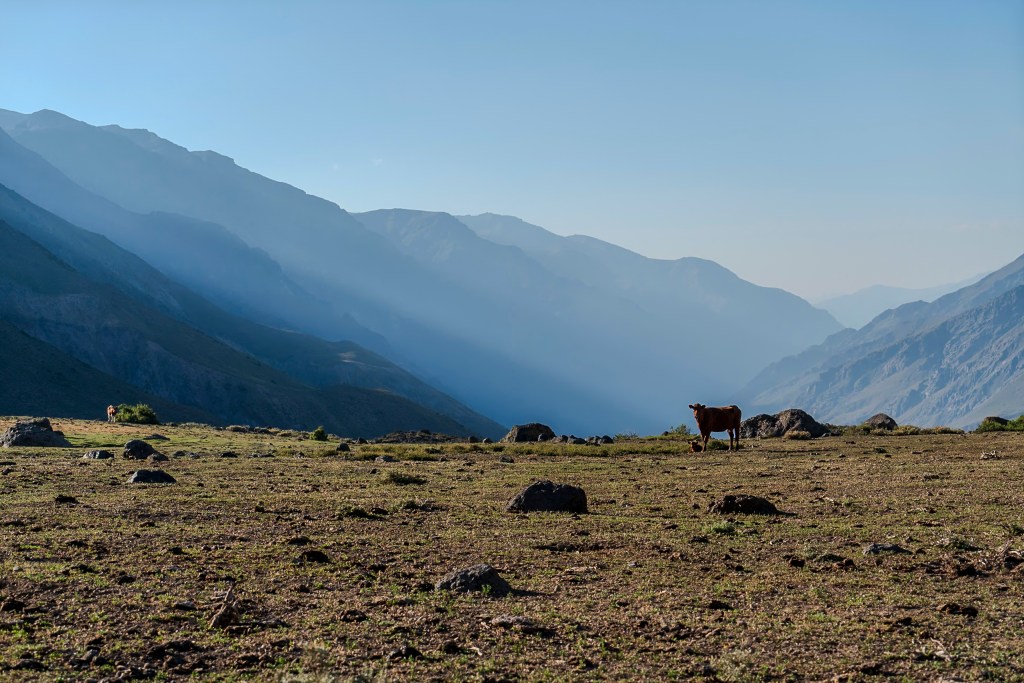
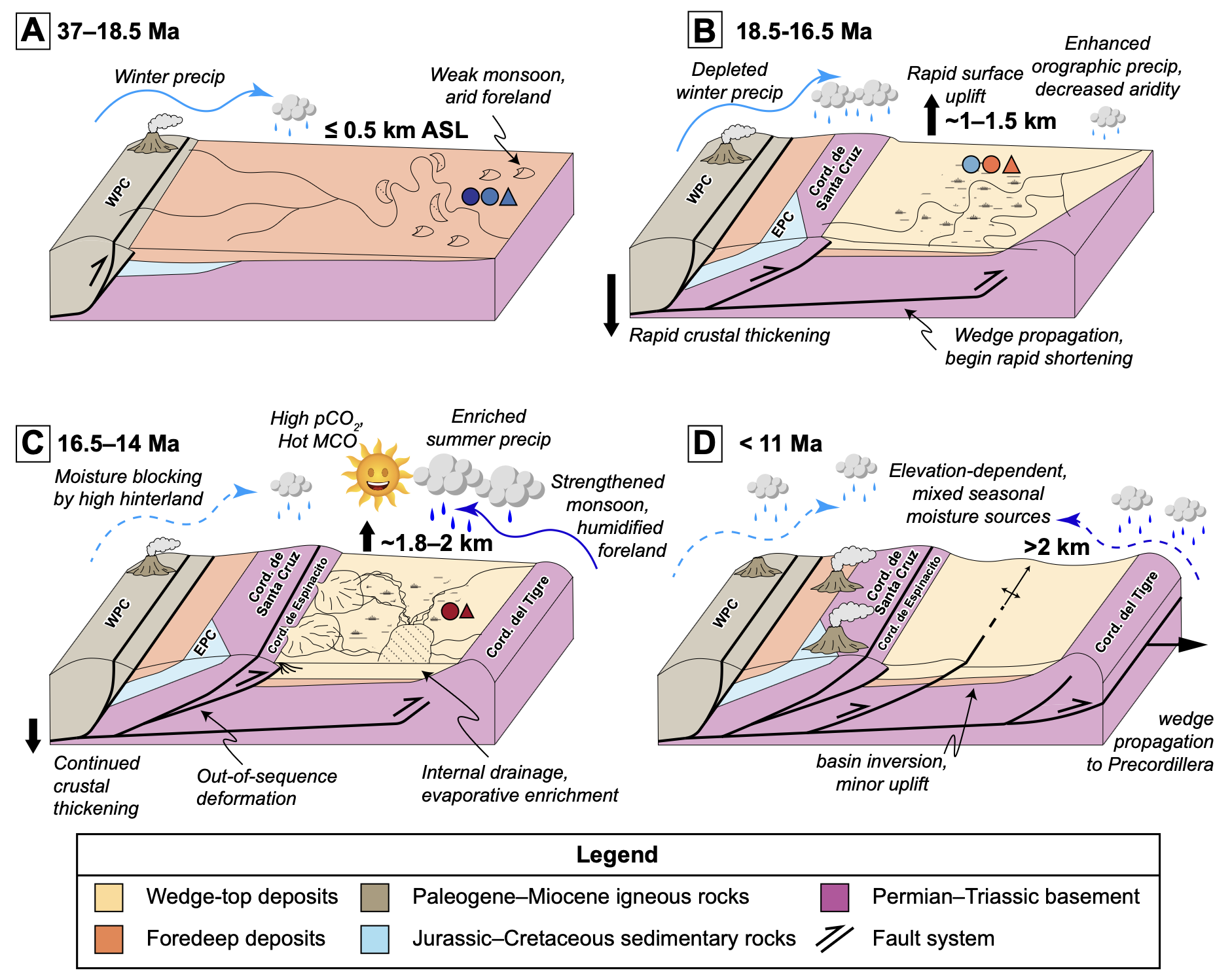
Stable isotope paleoaltimetry is a powerful tool for reconstructing surface elevation history, but extracting tectonic signals from isotope records is complicated by contemporaneous climate change and shifts in atmospheric moisture sources. I use a multi-proxy isotopic approach that pairs volcanic glass hydrogen isotopes (δD) with pedogenic carbonate oxygen and carbon isotopes (δ18O, δ13C) to disentangle uplift from climate.
Applied to Miocene deposits of the Argentine foreland basin, this paired approach quantified approximately 1,500 m of surface uplift during Early Miocene Andean shortening (ca. 18–14 Ma). After ~16.5 Ma, rising carbonate δ18O values record intensifying warm-season monsoonal precipitation during the Miocene Climatic Optimum. Our analysis of stratigraphic trends in the foreland basin confirmed regional humidification during the MCO. Ongoing stable-isotope work with collaborator L. Fennell (Universidad de Buenos Aires) focuses on assessing the marine influence on Late Cretaceous–Paleogene limestones in the Southern Central Andes and improving paleo-topographic reconstructions near Cerro Aconcagua.
Main Collaborators: Lucas Fennell (Universidad de Buenos Aires); Kaustubh Thirumalai and Barbara Carrapa (University of Arizona); Sarah George (UNC Chapel Hill)
Key publications:
Ronemus, C.B., C.J. Howlett, P.G. DeCelles, B. Carrapa, L. Fennel, K. Thirumalai, V.A. Muller, and L. Lothari. Mixed Signals: Paired glass and carbonate isotopes separate uplift from climate in the Miocene Andes (~32 °S). Expected submission Spring 2026 to Earth and Planetary Science Letters.
George, S.W.M., Carrapa, B., DeCelles, P.G… Ronemus, C.B., et al., Intensification of the South American Monsoon in the south Central Andes at the start of the Middle Miocene Climatic Optimum: Palaeogeography, Palaeoclimatology, Palaeoecology, in press, doi:10.1016/j.palaeo.2025.112732, January 2025.
Other ongoing collaborative projects
Fossil Desert Pavements in Argentina
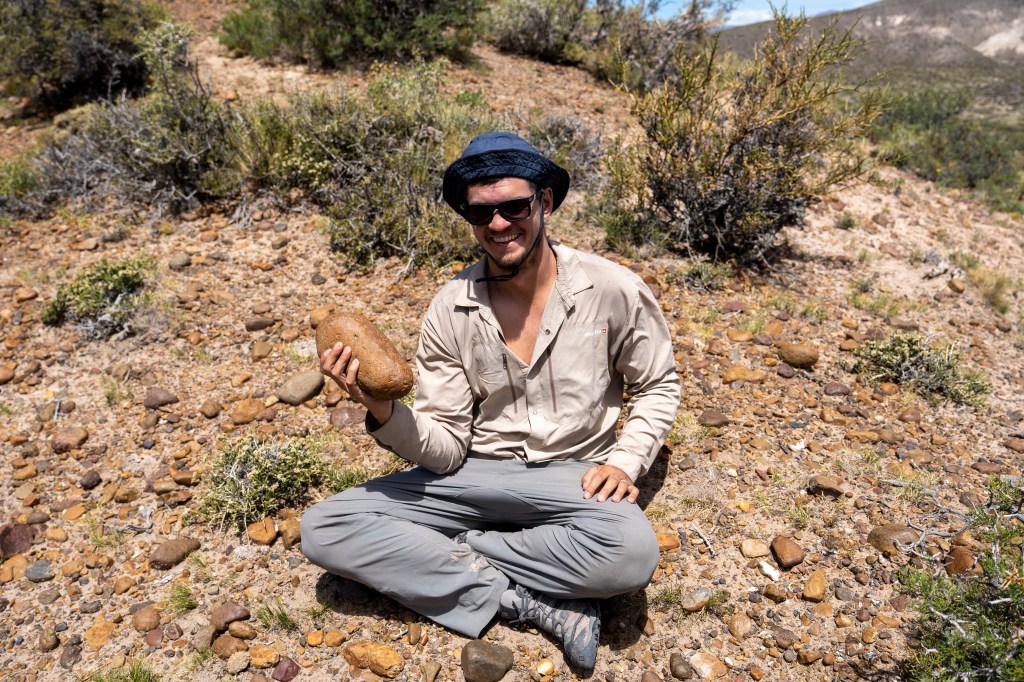
I am investigating the development of the Rodados Lustrosos, a condensed stratigraphic interval of varnished cobbles that represents a fossil desert pavement in the Oligocene Argentinian foreland. These features record intervals of landscape stability and aridity, providing independent constraints on Cenozoic paleoclimate and geomorphic evolution in the retroarc (with L. Fennell, UBA).
U-Pb Dating of Paleosols
I am applying calcite and opal U-Pb geochronology as a tool for directly dating paleosol formation in the distal foreland basin of Argentina. This approach has the potential to provide absolute age constraints on pedogenic carbonate and silica precipitation, anchoring isotopic, stratigraphic, and paleoenvironmental records that are otherwise difficult to constrain. Our results significantly revise the chronostratigraphy and timing of marine incursion in central Argentina (with J. Kirk, University of Arizona, and Troy Rasbury, Stony Brook University).
Unaweep Canyon, Colorado
I am using Miocene through modern detrital zircon and sanidine geochronology to constrain the incision history and drainage evolution of Unaweep Canyon, an enigmatic feature in western Colorado whose origin bears on the integration of the Colorado River system and the post-Laramide landscape evolution of the Rocky Mountains (with Andres Aslan, Colorado Mesa University).
Methods
I think tectonic insight comes from starting at the outcrop and working up from the grain to the plate scale. My scientific approach is rooted in field geology but integrates diverse analytical methods—including geochemical and isotopic techniques applied to detrital minerals—to better understand the processes of mountain building on Earth.
My ongoing work applies geochemical and isotopic approaches including:
- Zircon U-Pb geochronology: My go-to tool for constraining the age of igneous rocks and provenance of sedimentary rocks.
- Unconventional U-Pb: We can (sometimes) date calcite, or even opal! I’m applying these methods to various types of paleosols to better constrain how foreland basins migrate and how climate changes through time.
- Zircon petrochronology: Trace elements in zircon have immense potential for reconstructing the crustal thickness evolution of magmatic arcs. These data can also enhance U-Pb provenance methods.
- Carbonate δ18O and volcanic glass δD: Applied to minerals formed or hydrated in-situ, these stable isotope techniques provide insight into the evolution of surface topography and climate.
- Thermochronology: Fission track and (U-Th-Sm)/He analysis of apatite and zircon track the pace of exhumation and sediment routing. These data can be inverted to model long-term thermal histories.
I’m actively involved in developing several of these techniques.
I’m working with Mihai Ducea (University of Arizona, USA) and Peter Luffi (University of Bucharest, Romania) to generate a global compilation of zircon T/REE data from Quaternary volcanoes. This will allow us to calibrate zircon geochemical ‘mohometers’ (sub-arc Moho depth sensors) against regions of known crustal thickness, improving our ability to reconstruct the crustal thickness evolution of ancient orogens.
I’m also working with Jason Kirk (University of Arizona, USA) to test applications of calcite and opal U-Pb in paleosols. This approach can facilitate greater temporal precision on the rate of flexural wave migration and climatic changes.
 Chance B. Ronemus