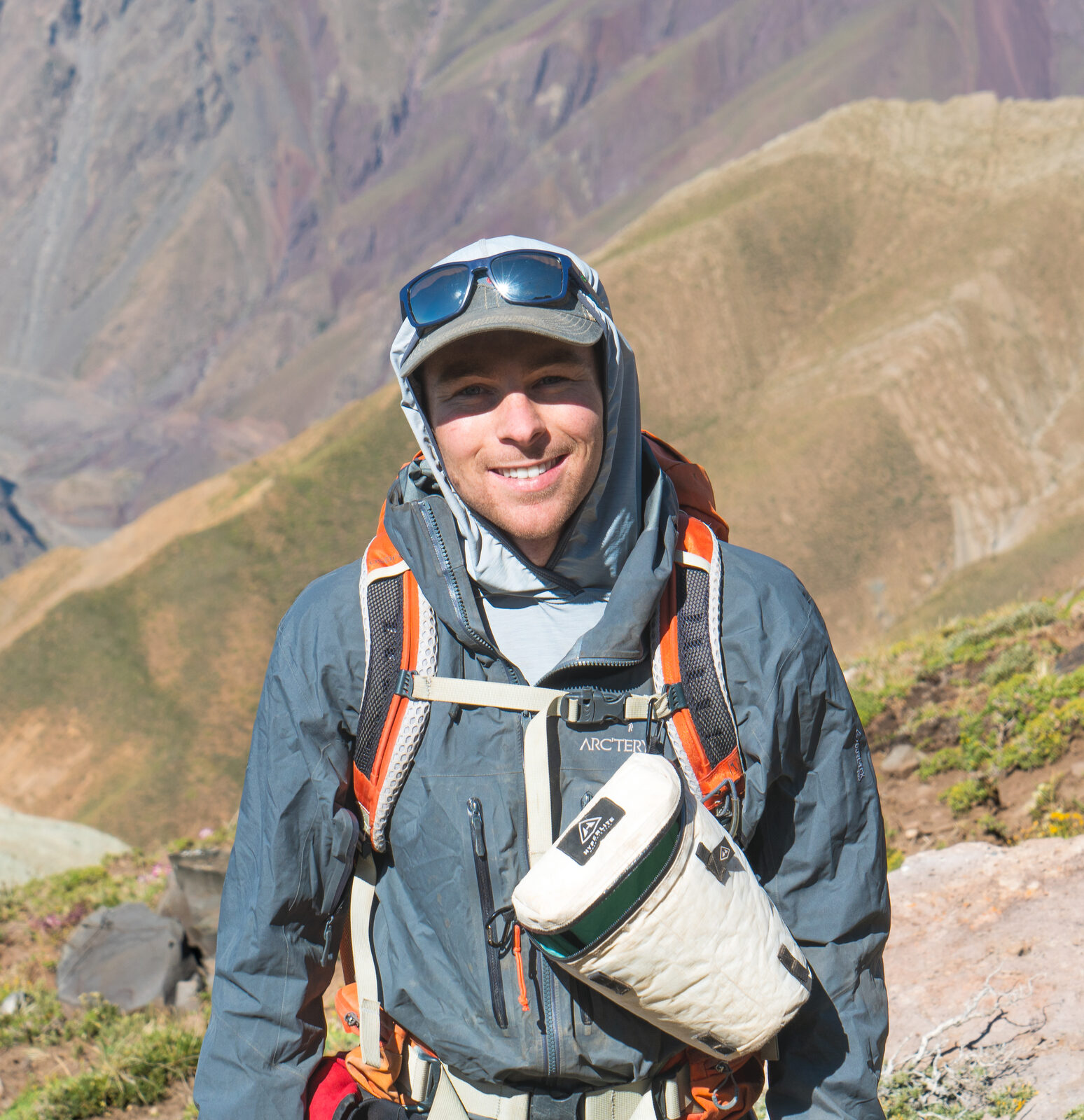
Chance B. Ronemus (Geologist)
Assistant Professor, Department of Earth, Energy & Environment, University of Calgary, Calgary, AB, Canada
Contact me: chance.ronemus@ucalgary.ca
I am recruiting M.Sc. and Ph.D. students for funded positions. Read more and get in touch.
Recent news
- Our paper on Cretaceous thinning and rapid Neogene thickening of the Andean crust at ~35°S is out, open access, in JGR: Solid Earth.
- I started as an Assistant Professor in the Department of Earth, Energy & Environment at the University of Calgary, and I am recruiting M.Sc. and Ph.D. students for funded positions.
- I spent the summer as a Visiting Postdoctoral Scholar at Stanford University, working with Stephan Graham on the Mesozoic forearc record of coastal Chile.
About Me
I'm an Assistant Professor in the Department of Earth, Energy & Environment at the University of Calgary. Before joining the faculty at Calgary, I was an NSF Earth Science Postdoctoral Fellow at Idaho State University and a Visiting Postdoctoral Scholar at Stanford University, earned my Ph.D. from the University of Arizona, and held a Fulbright scholarship in Mendoza, Argentina.
My research integrates field-based sedimentology and structural geology with analytical techniques like geo/thermochronology and geochemistry to reconstruct how tectonic processes shape continental margins, from the deep crust to the surface.
You can read about my current research directions on my research page, and find recent papers in my CV and on my publications page. You can see who works with me and how to join on my research group page, and find science communication videos on my media page. I also like to climb and take photos of the places I go.
Some of my overarching research interests include:
- Tectonic evolution of Cordilleran systems (North and South America)
- Sedimentary records of terrane accretion and subduction polarity
- Evolution of forearc and foreland basin systems
- Landscape responses to rapid climate change
- Geochemical proxies for paleo-crustal thickness and surface elevation
Places where I have active or recent projects include:
- High Andes Mountains, Argentina and Chile
- Coastal Cordillera, Chile
- Southwest Montana, USA (Overlap Province)
- Idaho batholith, USA
- Northern Laramide province (Montana and Wyoming)
Cordilleran systems
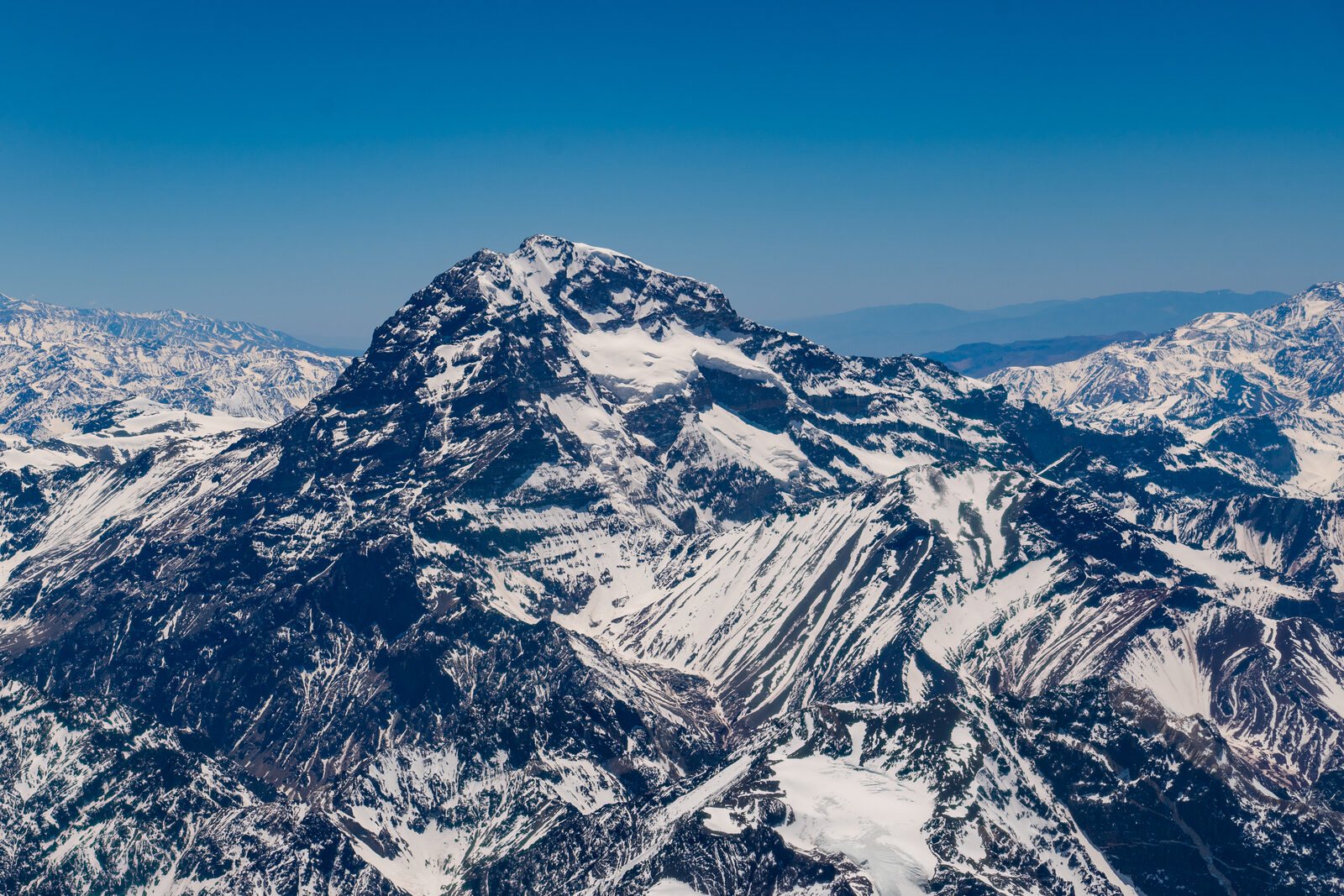
I work primarily in Cordilleran orogenic systems, in which subduction of an oceanic plate leads to mountain building in the overriding continent.
Beyond just creating topography that's interesting to look at (and fun to
climb), these systems control things like:
- atmospheric circulation and precipitation
- river drainage and sediment discharge
- biodiversity and biome development
- natural hazards, like earthquakes and volcanoes
- concentration of economic minerals and petroleum
So, if we can better understand how Cordilleran systems grow and evolve, we can better understand their influence on these things that matter to people.
The Andes are Earth's best modern example of such a system. My Ph.D. and some ongoing work is part of the TransANdean Great Orogeny (TANGO) project, an internationally collaborative and multi-disciplinary project focused on studying processes responsible for variations in the modern crustal thickness and history of uplift of this mountain belt.
By integrating geophysics, structural geology, thermochronology, sedimentology/basin analysis, and other approaches, our overarching goal is to build and test a generalizable model of Cordilleran mountain building.
Tectonic insight from the geologic record
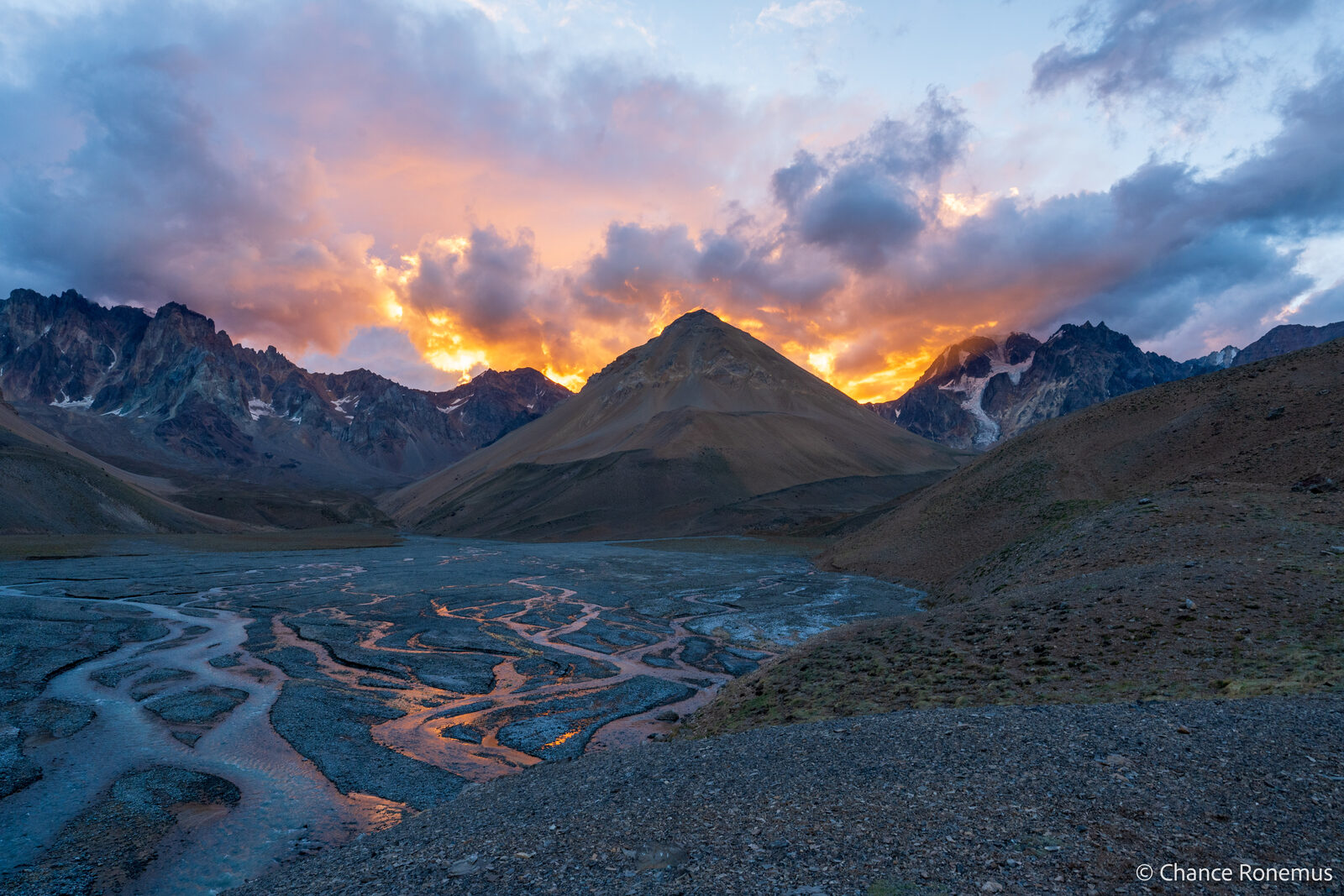
I believe that tectonic insight comes from starting at the outcrop and working up from the grain to the plate scale. My scientific approach is rooted in field geology but integrates diverse analytical methods—including geochemical and isotopic techniques applied to detrital minerals—to better understand the processes of mountain building on Earth.
My ongoing work applies geochemical and isotopic approaches including:
- Zircon U-Pb geochronology: My go-to tool for constraining the age of igneous rocks and provenance of sedimentary rocks.
- Unconventional U-Pb: We can (sometimes) date calcite, or even opal! I'm applying these methods to various types of paleosols to better constrain how foreland basins migrate and how climate changes through time.
- Zircon petrochronology: Trace elements in zircon have immense potential for reconstructing the crustal thickness evolution of magmatic arcs. These data can also enhance U-Pb provenance methods.
- Carbonate δ18O and volcanic glass δD: Applied to minerals formed or hydrated in-situ, these stable isotope techniques provide insight into the evolution of surface topography and climate.
- Thermochronology: Fission track and (U-Th-Sm)/He analysis of apatite and zircon track the pace of exhumation and sediment routing. These data can be inverted to model long-term thermal histories.
I'm actively involved in developing several of these techniques.
I'm working with Mihai Ducea (University of Arizona, USA) and Peter Luffi (University of Bucharest, Romania) to generate a global compilation of zircon T/REE data from Quaternary volcanoes. This will allow us to calibrate zircon geochemical 'mohometers' (sub-arc Moho depth sensors) against regions of known crustal thickness, improving our ability to reconstruct the crustal thickness evolution of ancient orogens.
I'm also working with Jason Kirk (University of Arizona, USA) to test applications of calcite and opal U-Pb in paleosols. This approach can facilitate greater temporal precision on the rate of flexural wave migration and climatic changes.
Additional information
- Join the Group (graduate and undergraduate opportunities)
- Research (current projects, collaborators, and funding)
- Curriculum Vitae (my CV)
- Publications (recent journal articles and other writing)
- Research Group (current students, mentorship, and teaching)
- Media (science communication and outreach videos)
- Photography (photos of people and places in my research)
- Climbing (trip reports from personal and research expeditions)
(All uncredited photos are my own. Please ask if you'd like to use one.)